The first PC in history!
Part 2 of 11 of the series Backlog Newsletter
Hello and welcome to another edition of Backlog! The newsletter where I distill everything I’d like to say about topics I find really interesting!
Today we’re going to talk about one of my favorite subjects: history! Do you know which PC probably gave rise to every personal computer in history?
Computers and people#
You’re reading this newsletter right now on your computer, on your phone, on your video game (who knows?), and we often don’t even stop to think about how we got here. For most of us (me for sure), the computer already existed when we were born, people already knew the concept of the personal computer, but it wasn’t always like that.
The world’s first computers were built in the 1940s with the single goal of breaking German ciphers in the second world war. The world’s first programmable computer was the Colossus, built in 1944, it took up an entire room and was made of more than 2500 valves, plus thousands of electromechanical relays.
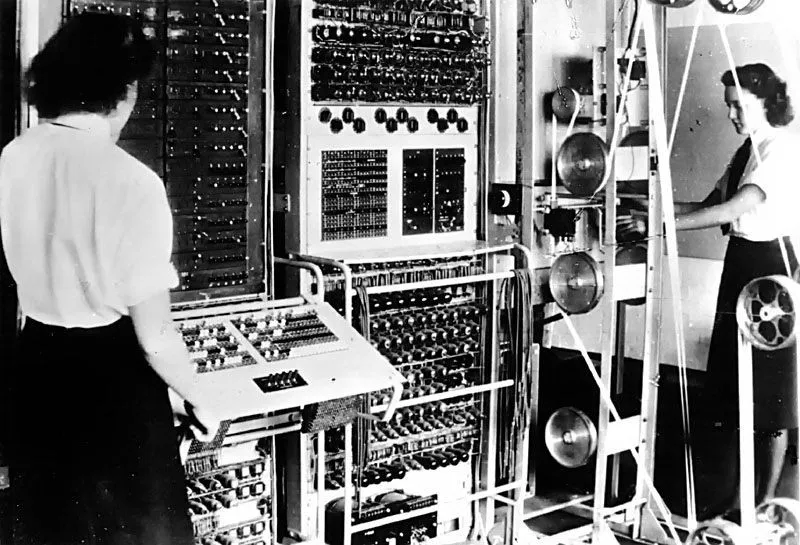
Over the years they got smaller and smaller, but not small enough for us to call them a portable computer. The next iteration of a useful computer, the ENIAC, took up 3 floors of a building and weighed 30 tons, which isn’t necessarily something interesting for the general public, but that’s fine! Because…
Nobody needed a computer!
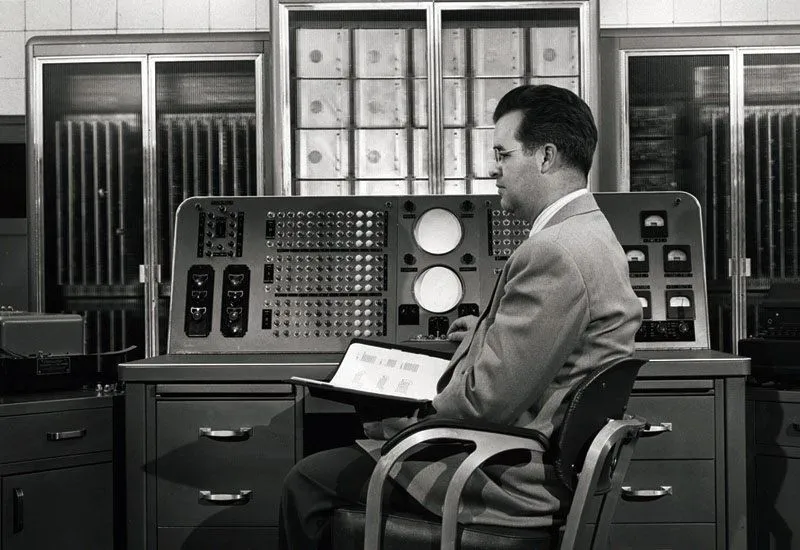
Why would anyone need a computer? Back then, they were far too complex and served specific tasks. So much so that every computer up to that point had no kind of data input at all, like a keyboard or a mouse, that came MUCH LATER, they were operated with levers and patch boards
Personal computers#
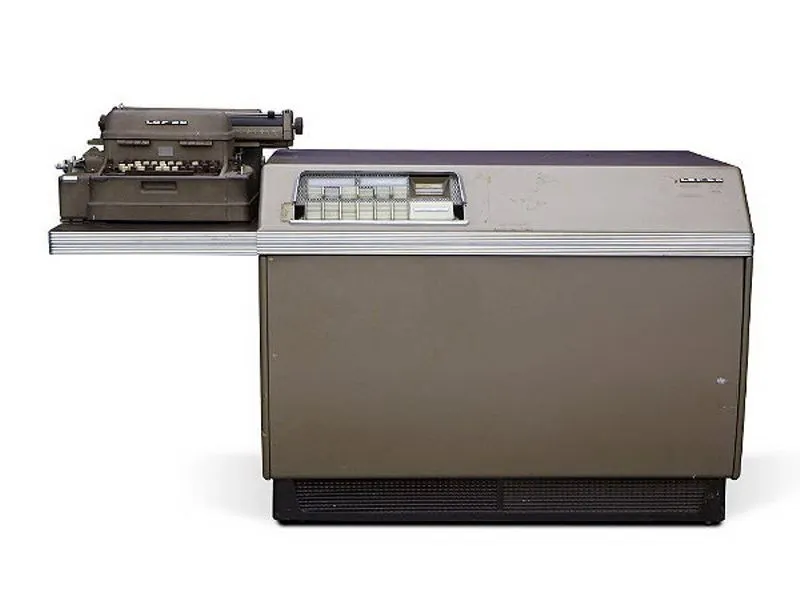
By the end of the 50s computers had shrunk a bit. These computers were the ones considered “personal computers”, because they only needed one person to operate them, while the earlier ones needed several and, usually, a special refrigerated room where they could live. Around 1960, the Librascope LGP-30 was the first “personal” computer that had a human input or an HID (Human Interface Device), which was a typewriter. It required fewer operators and a simpler installation.
Many years later, in 1965, IBM released a line of computers called the IBM System/360. Still aimed at companies, it was one of the first to have a single piece of software for every machine, plus several peripherals, proving that any employee could use the computer, with less training than before.
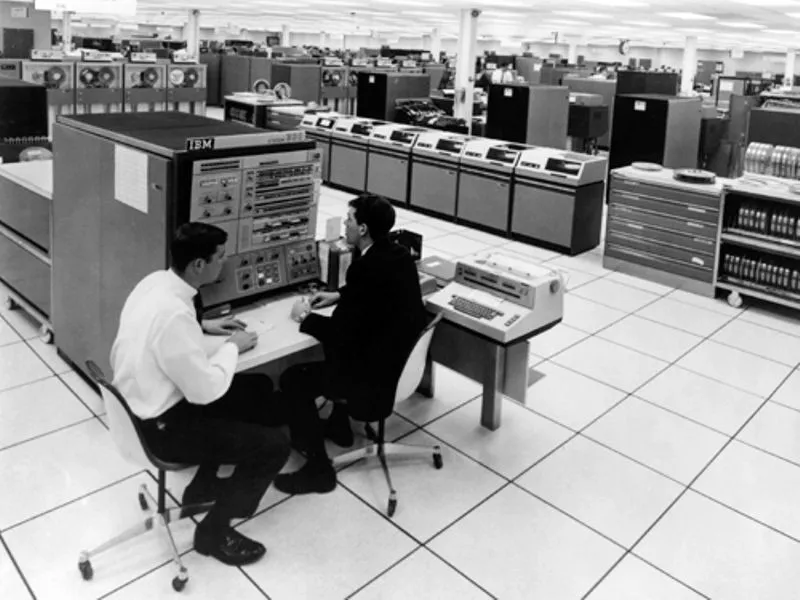
The IBM System/360 model 40 was one of the smallest mainframes of the time, it “only” took up a classroom and could cost more than $300,000 dollars (1965 dollars)
SCAMP and miniaturization#
Computers were only that big because they used relays, valves, transistors and other electromechanical components. With the invention of miniaturization techniques like the integrated circuit, it started to become possible to shrink computers down.
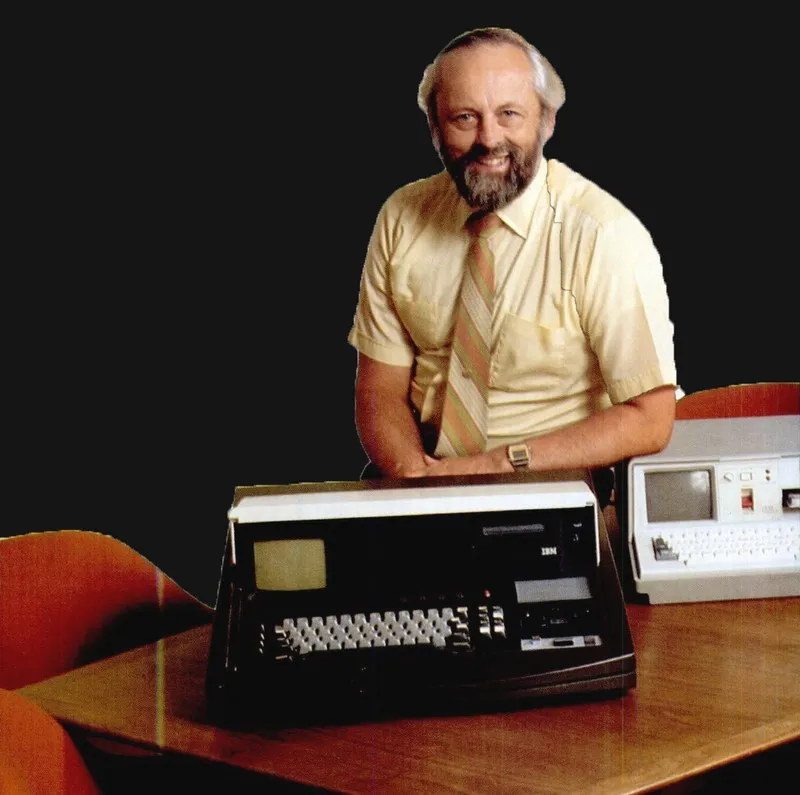
The SCAMP (Special Computer APL Machine Portable) was a computer developed at IBM in 1973 as a prototype of a portable machine you could carry anywhere with all its peripherals, and it’s what gave rise to what we call the IBM PC today, but it was still expensive and aimed at commercial uses, it was still pretty expensive.
Small computers were much more expensive, the “cheaper” computers were enormous, there were no computers that were both small and affordable. On top of that, no computer was exactly easy to program, you needed almost arcane knowledge to understand what was going on and how to operate the computer.
These computers usually came with instruction manuals that were genuine compendiums of text. Books with more than 800 pages describing in detail not just every operation, but the logical path of every circuit in the mainframe. Exactly like we do with documentation these days…
Revolution in 1975#
But that changed a lot in 1975 when a company called MITS built a visionary computer called the Altair 8800.
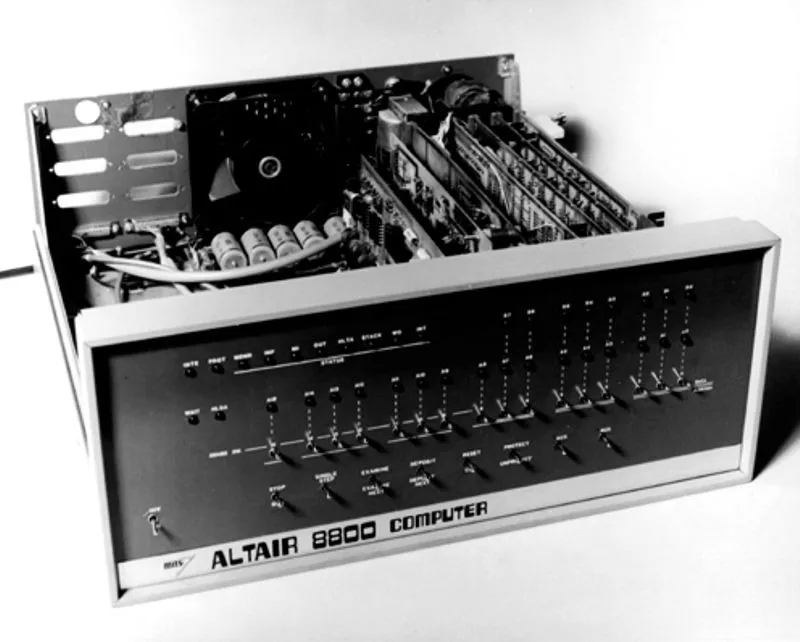
The Altair is considered by many to be the first personal computer in history, because it wasn’t aimed at companies or commercial applications, it was essentially a programmable processor that came with a high level language (BASIC) and an interpreter for that language (written by Bill Gates and Paul Allen).
This computer cost $297 USD, orders of magnitude cheaper than a business computer. It had 255 bytes of memory (expandable to 64kb), but it displayed nothing on any screen, the only output of an Altair was red lights.
The Altair became what we all know as the first successful personal computer of all, it was small, affordable, easy to carry and wasn’t aimed at a commercial audience, but rather at computing hobbyists who wanted to play with this technology at home. But there’s a lost piece here, before the Altair, the story of the MCM/70, the real personal computer, or at least the first attempt at one…
The real personal computer#
Very few people know the story of a company called MCM (Micro Computer Machines), founded around 1971 by the Canadian Mers Kutt. Mers was a math professor at Queen’s University in Ontario who had a serious problem with the way students and professors had to wait days to run programs under the time-sharing model, which went like this:
- Write your program on punch cards
- Physically send the punch cards to a mainframe (like the IBM360)
- The folks operating the mainframe would run your program and give you the answer
There were several problems there. The first was that if you got the program wrong and it didn’t run on the computer, you’d have to go through all of that again. The other is that the people running the programs had to prioritize what got executed and, if you had any beef with one of them, your program would probably go to the bottom of the list.
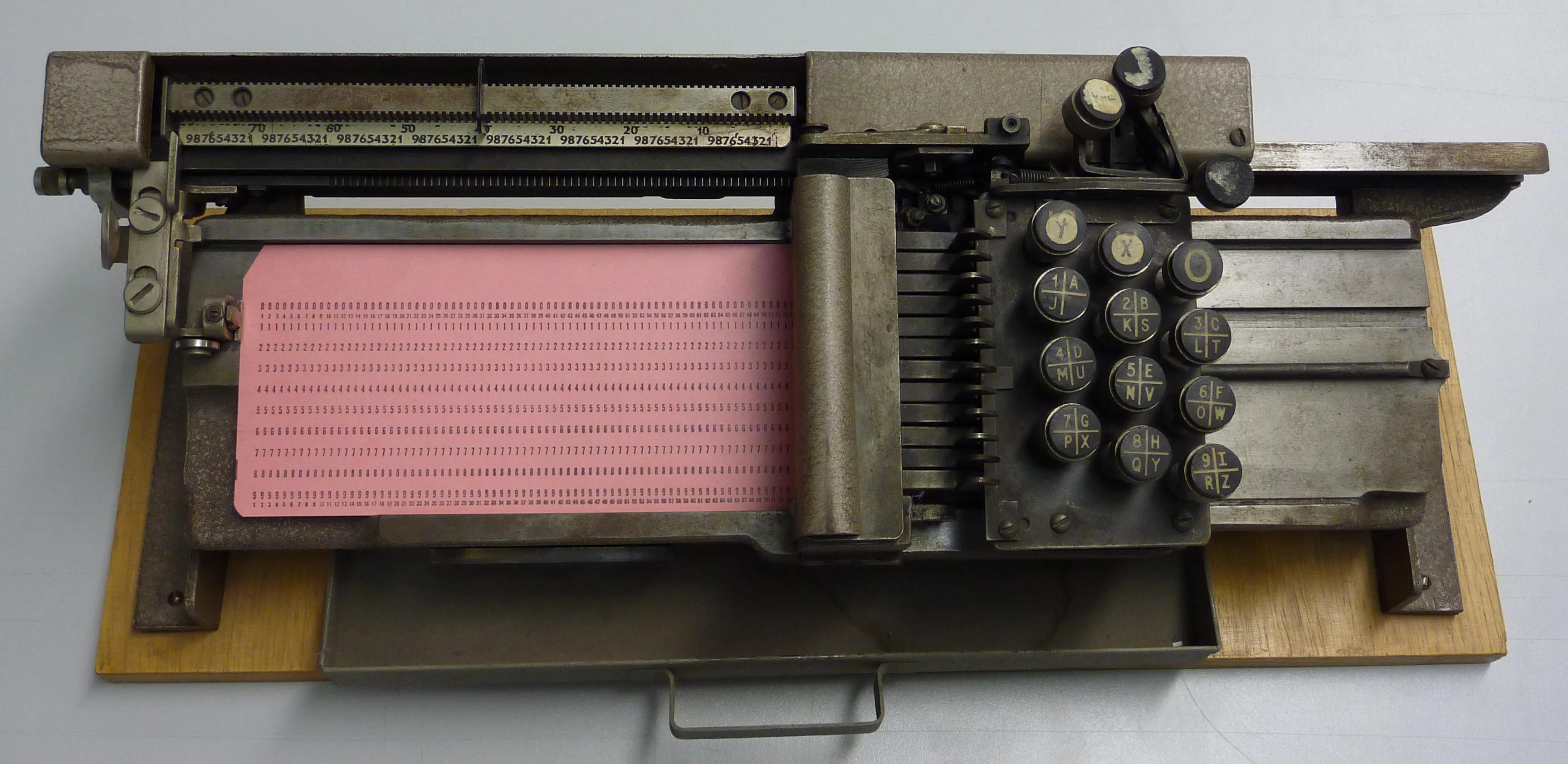
The whole process was very slow and he wanted to transform how computers were used, because he believed that everyone who used a computer could build amazing things, but they were being blocked by technical limitations. With that idea in mind, he set out to propose the idea of a computer that would be:
- Small enough to be carried around
- Affordable so that people could own one
- Easy to use so that everyone could build something
Those were the three main problems of the era, and he wanted to solve all three at once. Luckily, he knew Robert Noyce, Intel’s first CEO (and founder), who said the idea could work on a processor Intel was working on, the Intel 8008.
Worth pointing out that Intel wasn’t a corporation like it is today, it was basically a small startup. The Intel 8008 was small, relatively affordable ($120) and had a clock of 0.8Mhz, which was enough for one person to run one program.
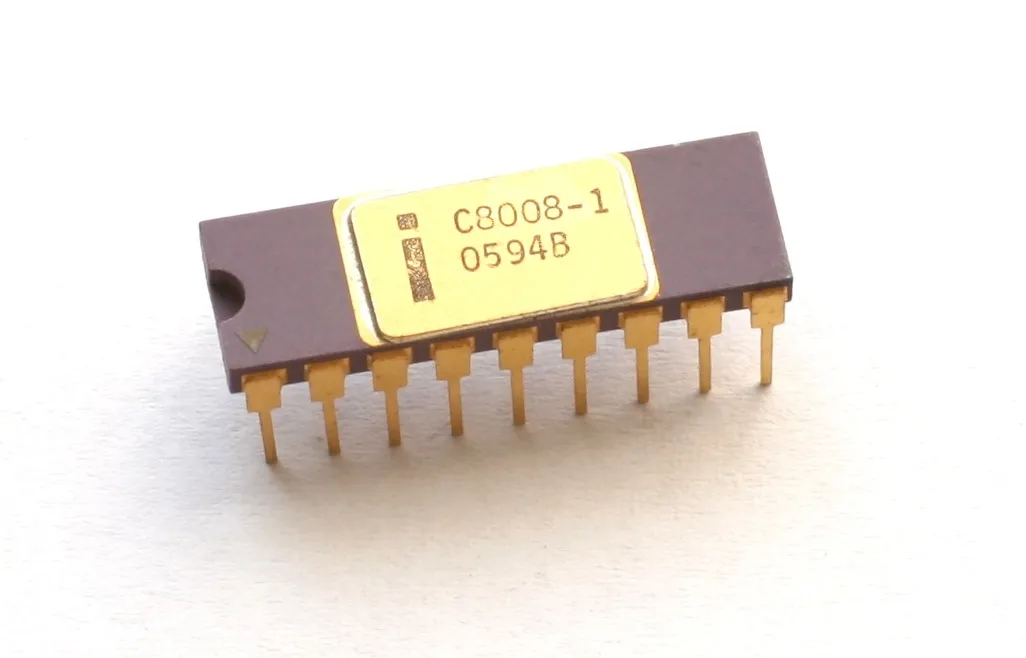
To put it in perspective, a Hertz is 1 cycle per second, 0.8Mhz is the equivalent of 800,000 Hertz, meaning the processor ran 800,000 times per second. Today, a bad processor runs at 2GHz, that’s 2,000,000,000 times per second. Your processor probably runs at 4.7 or 5Ghz, that’s 5800x faster than the Intel 8008
That solved part of the problem, you could get relatively affordable and small computing power, now what about the rest? For physical memory you could use cassette tapes, but they were mainly used for audio, and for digital data most readers were the size of a microwave. On top of that, RAM was extremely expensive, an Intel 2102 with 1kb of memory cost $20 dollars per chip, and you’d need at least 8kb to do anything at all.
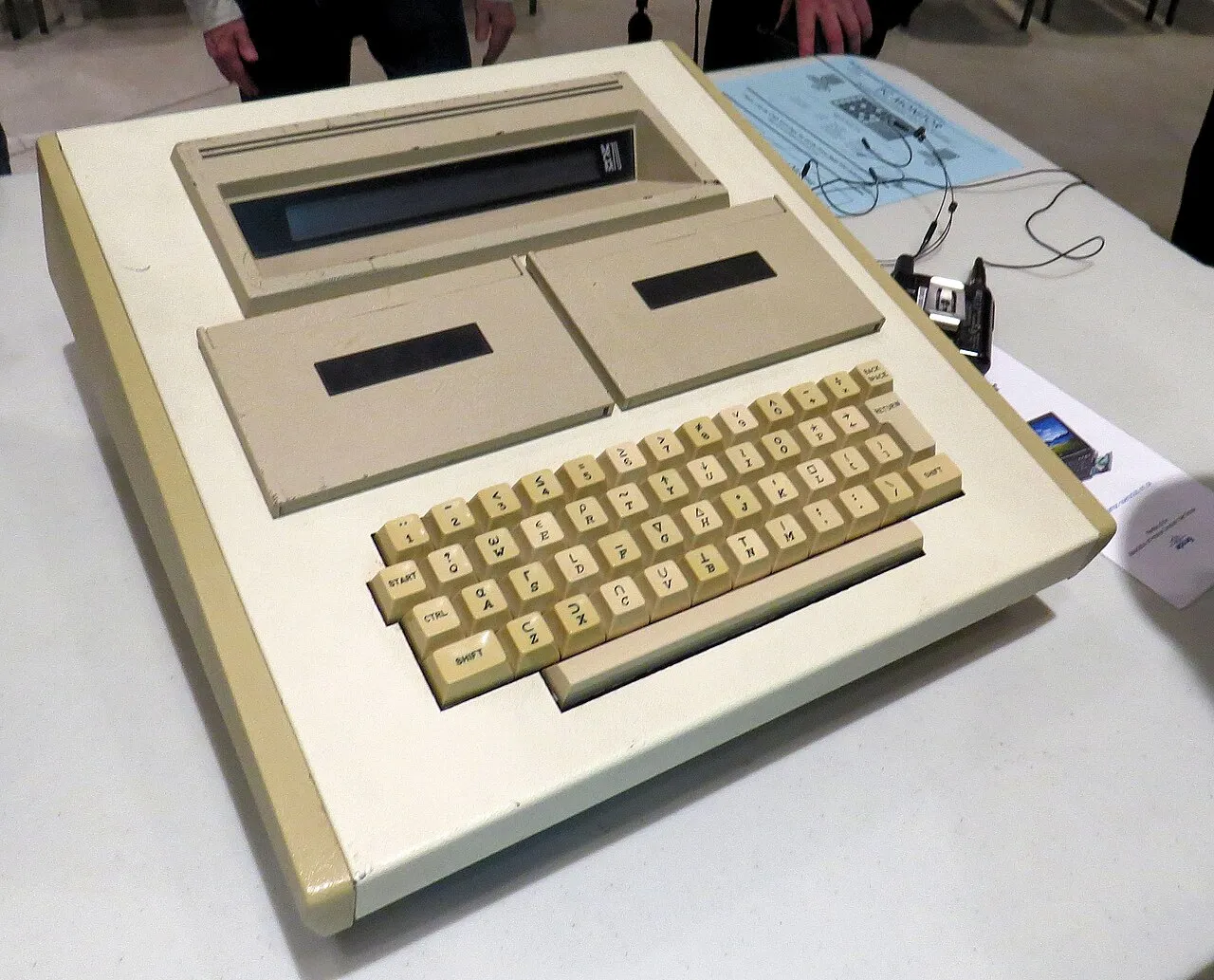
And there was still the usability problem… How do you make a computer easy to use? Well, one thing at a time. Kutt named this project M/C, which ended up becoming the MCM/70, the world’s first truly personal computer.
Hardware#
With the processor sorted out, RAM was a simple question, because there weren’t many options, so the MCM/70 had 8kb of RAM (8 2102 chips, $160 dollars) and a ROM that would hold the computer’s language.
To store data externally they used a sequential cassette tape reader, it was like a regular audio tape, compact but slow… To make everything easier, the MCM/70 had a 32 character SELF-SCAN display (which was innovative at the time), like the one below:
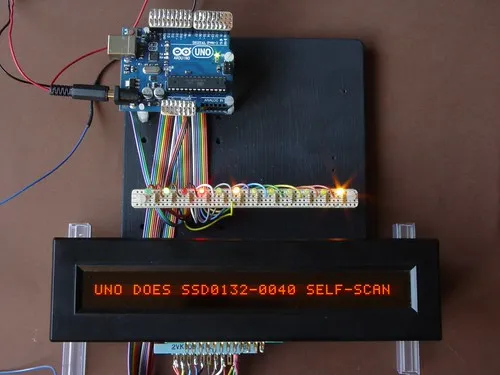
SELF-SCAN is the name given to a family of plasma displays that could show characters in more detail than the traditional 7-segments, but they used far more resources. That was necessary though, because, to make the computer easier, they’d have to use something people could actually understand.
Software#
With the hardware problems almost solved, the last problem was how to make the computer easy to use. For that, Kutt, who was already following Ken Iverson’s work to create the APL language, a mathematical language that used special symbols but was powerful enough and could be executed in very little memory.
The problem was that the cost of making a special keyboard for APL was higher, but that, in theory, would pay for the project.
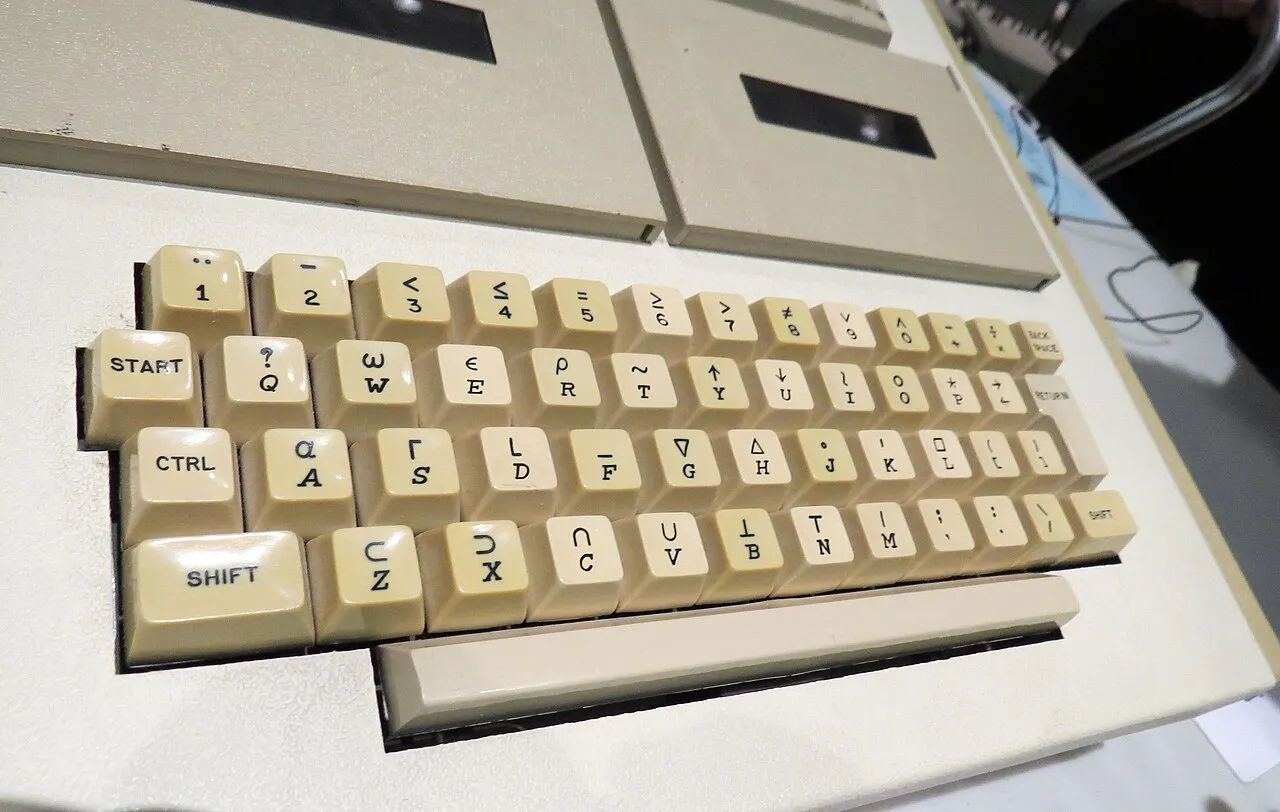
But Kutt wasn’t a programmer, so he hired Gord Ramer, who had already written an APL interpreter with low resource usage before, to build the interpreter and put it directly into the computer’s ROM. And this part is one of the most interesting in the whole story.
Coding for an 8008 without an 8008
They didn’t have an Intel 8008 available because they started developing the prototype before the chip was ready, but Kingston university had an IBM360 with an Intel 8008 emulator. You’d put 8008 code in there and it would hand you back hexadecimal code to run on the hardware, simple as that. The problem was that the IBM360 worked with punch cards, so the entire APL interpreter was written on IBM360 punch cards, taken to the university to be read, and the resulting code also came back on punch cards and was then typed in by hand by the devs into the MCM/70 (the prototype).
And since the trip between the office and the university was about 10 minutes, it wasn’t something you’d do routinely. As a dev, you’d use a debugger that let you edit your code straight on the processor, write down the changes, and then recompile the correct code at the university.
What happened?#
The MCM/70 launched in 1974, a year before the Altair 8800. It cost $4950 Canadian dollars in the version with 2Kb of RAM and no cassettes and $9800 with 8Kb and two cassettes. For the first time a computer was called a personal computer, with customers beyond governments and large institutions and starting to reach smaller places like hospitals and shops.
Over the next two years the MCM/70 was renamed the MCM/700 and, in 1976, the successor MCM/800 launched with a faster processor, 16Kb of RAM and support for an external monitor. By 1978 MCM had released the 900 and the 1000. But even after selling many units, being the first commercially sold computer that already included a monitor, keyboard and memory and had a relatively affordable price, it never became widely used outside academic or commercial circles. By the end of the 70s MCM already had several competitors with cheaper and simpler computers (like MITS and the Altair) that won over the general public.
To a large extent, MCM’s problem was the APL language, which was extremely complex and complicated because it was made entirely of mathematical symbols, which wasn’t the case with the Altair and BASIC, which was much simpler and more direct.
In 1983, after trying and failing to raise funding for a more advanced model, the company shut down and sold its patents and designs to other companies, including Alcatel.
More details#
If you want to know more about this story, Cam Farnell, one of MCM’s employees at the time, gave a talk about the MCM/70.
There’s also a book called “Inventing the MCM/70” published by professor Zbigniew Stachniak, but I couldn’t find it anywhere…
And that was the story behind the story of the world’s first personal computer. The MCM/70 paved the way for what we know as personal computers today.
It solved key questions of size, accessibility and usability, even though it was overshadowed by more simplified competitors. By fixing those mistakes, future generations of PCs followed paths that shaped everything we know as a computer.
Footnotes#
-
I’m going to talk about the Colossus in future editions. I recently went there to Bletchley Park (check my highlights on instagram) and I saw this computer myself, in that same room from the photo. ↩
-
For anyone curious, the movie “Pirates of Silicon Valley” shows in detail the saga of Bill Gates and Paul Allen with the Altair 8800, well worth watching ↩
-
Worth remembering that, while we know and understand the concept of a personal computer, that wasn’t something that existed back then, nobody knew what a PC was. ↩
-
There’s also a book called “Inventing the MCM/70” published by professor Zbigniew Stachniak, but I couldn’t find it anywhere… ↩